
When Your Garage Door Will Not Stay Shut
A garage door that starts to close, then suddenly reverses and goes back up, is more than a minor inconvenience. Your garage is a major entry point to your home, and when the door will not stay down, it can put security at risk. In our Alaska climate, a door that refuses to close also means heat loss, higher energy bills, and cold air pouring into the home. On top of that, constant reversing adds strain to the opener and moving parts, which can shorten the life of the entire system.
Modern garage doors are designed to reverse for safety whenever they sense a problem. If your door keeps popping back up, it is usually a sign that something is wrong and needs attention. In this article, we will walk through the most common reasons this happens, what you can safely check yourself, and when it is time to call a residential garage door repair professional in the Matanuska-Susitna Valley or greater Anchorage area.
Safety Sensors Out of Alignment or Blocked
Those small devices near the bottom of your garage door tracks are photo eye safety sensors. They sit a few inches off the floor and send an invisible beam from one side to the other. For the door to close, that beam has to be clear. If the opener thinks something is in the way, it will reverse to help prevent injury or damage.
When the door starts down, then goes right back up, the sensors are often the first place we look. Common sensor issues include:
- Sensors bumped by shovels, bikes, or trash cans
- Snow, ice, or slush building up in front of the lenses
- Dirt, dust, or cobwebs covering the lenses
- Loose or bent sensor brackets
- Damaged wires or strong direct sunlight on one sensor
There are a few simple checks most homeowners can do safely. You can gently wipe the sensor lenses with a soft cloth, make sure nothing is stored in front of them, and clear away snow or slush along the bottom of the opening. Many sensors have small indicator lights, so you can also look to see if both are solid and facing each other.
If the lights will not stay on, the brackets are broken, the wires look damaged, or the door still will not stay down after basic cleaning and aligning, it is time to stop experimenting. At that point, it is safer to call for residential garage door repair rather than risk DIY electrical work or bypassing an important safety feature.
Opener Limits, Force Settings, and Track Problems
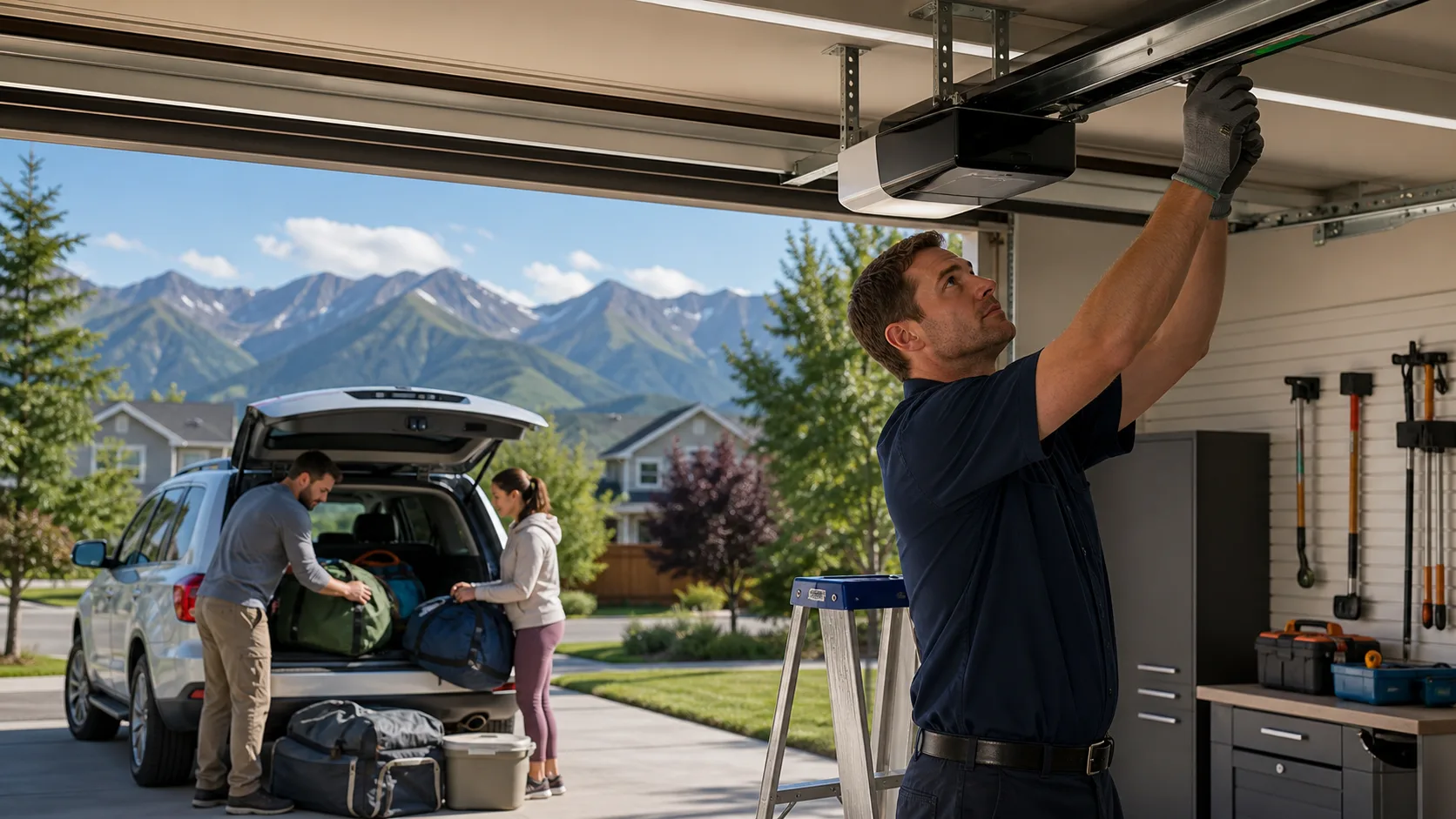
Your garage door opener does not actually know what the floor is. It relies on travel limit settings that tell it how far to move the door in each direction. If the down limit is not set correctly, the opener might think the door has hit an obstruction when it reaches the floor and immediately reverse.
The opener also uses force settings to control how much resistance it will tolerate before it decides something is wrong. If the force is set too low, even a little friction in the system can cause the door to reverse. If the force is set too high, the door may keep pushing when it should stop, which is a safety problem.
Track and hardware issues often show up as reversing too. We often see:
- Bent or twisted tracks
- Loose track brackets pulling away from the wall
- Worn, chipped, or broken rollers
- Rubbing, grinding, or scraping at certain points in travel
While many openers have knobs or buttons for adjusting limits and force, guessing at these settings can create new problems. Too much force can damage the door or opener, and incorrect travel limits can cause the door to slam or strain the system. A trained technician can quickly dial in these settings, tighten hardware, and straighten or replace tracks as part of a professional residential garage door repair visit.
Broken Springs, Cables, and Hidden Mechanical Failures
Garage doors are heavy, and torsion or extension springs carry most of that weight so the opener does not have to. When a spring breaks or weakens, the opener suddenly has to lift far more load than it was designed for. Very often, the opener senses this extra resistance and reverses, because it thinks the door has hit something.
There are some clear signs of spring or cable trouble:
- A loud bang in the garage, like something snapped
- A visible gap in a torsion spring above the door
- Loose, frayed, or dangling lift cables
- The door looks crooked in the opening
- The door feels extremely heavy when you try to lift it manually
Springs are under extreme tension and can cause serious injury or property damage if handled incorrectly. This is one of the most dangerous areas for DIY work. We never recommend that homeowners try to adjust or replace springs or cables on their own.
Professional technicians have the tools and training to safely replace springs and cables, reset the system, lubricate moving parts, and balance the door. Once the door is properly balanced, the opener no longer has to struggle, which usually stops the repeated reversing and helps extend the life of the entire system.
Cold-Weather Challenges and Power or Remote Issues
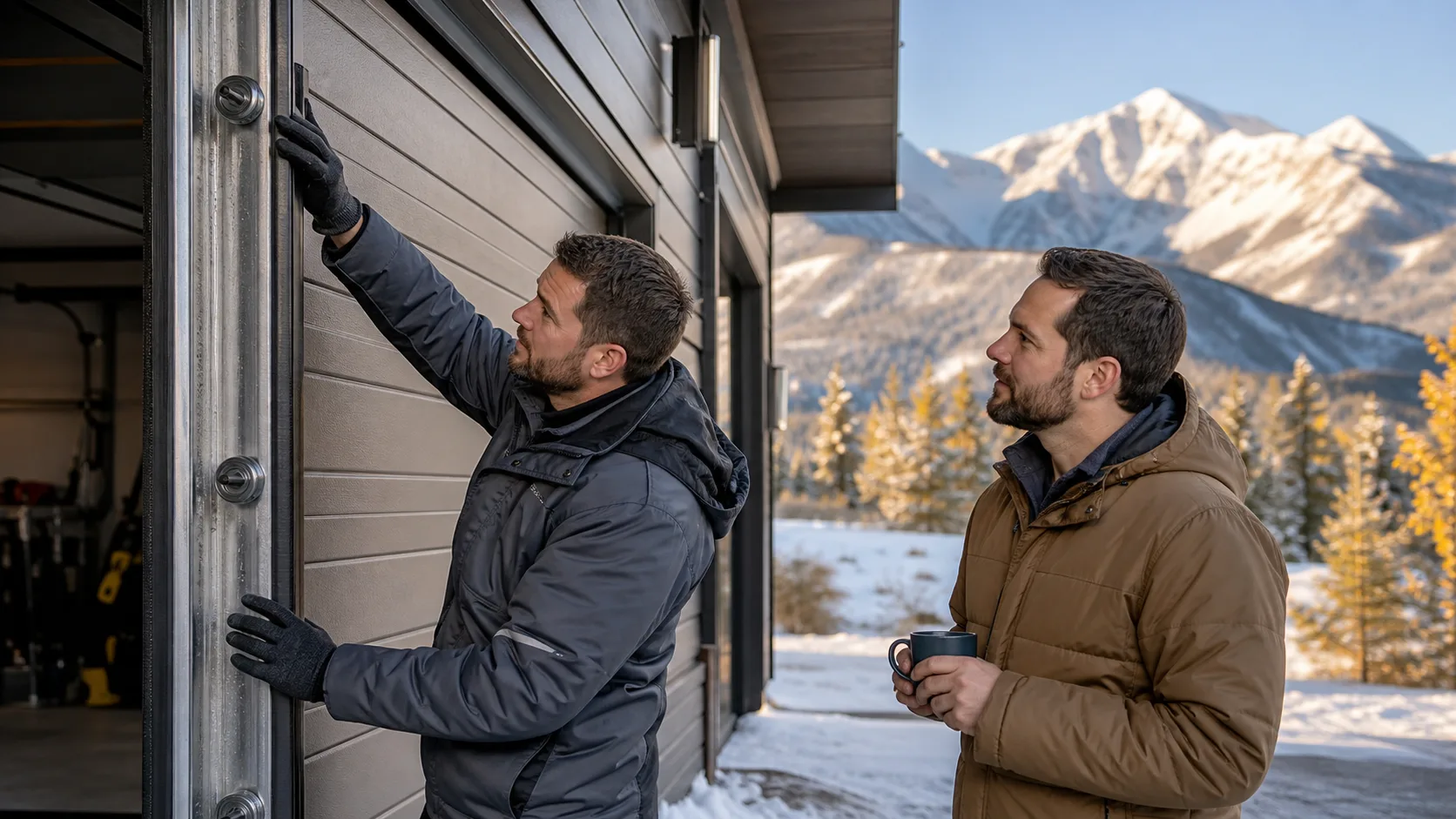
Alaska’s weather can also play a role when a garage door refuses to stay shut. In extreme cold, lubricants can thicken, weatherstripping can stiffen, and metal parts can contract slightly. All of this makes the door harder to move, so the opener may sense extra resistance and reverse.
Winter often brings specific problems like:
- Frozen seals at the bottom of the door sticking to the concrete
- Ice along the tracks or around the rollers
- Snow packed against the outside of the door
- Slush freezing around the threshold
You can usually handle light ice and snow with gentle clearing. Avoid chipping away aggressively at frozen seals, since that can damage the weatherstripping or the door itself. If the door has been stuck to the ground, it is smart to free it by hand before trying the opener again.
Do not forget basic power and control issues either. A weak remote battery can send inconsistent signals that confuse the opener. A faulty wall control, intermittent power supply, or a partially engaged manual release cord can all make the door act like it has a mind of its own. Simple homeowner checks include:
- Replacing remote batteries
- Confirming the opener’s plug is secure and the circuit is on
- Making sure the manual release is fully re-engaged
- Checking that no one has locked the door with a manual slide lock
If you work through these easy steps and the problem continues, it is a good idea to have a residential garage door repair professional inspect the system more closely.
When to Call Elite Doors for Reliable Repairs
When a garage door reverses instead of closing, the cause is usually one or a combination of the issues above: blocked safety sensors, incorrect opener settings, damaged tracks or rollers, weakened springs or cables, cold-weather resistance, or basic power and control problems. Ignoring the warning signs can lead to bigger failures, potential safety risks, or a complete opener breakdown that leaves the door stuck.
A helpful rule of thumb is simple. Cleaning sensors, clearing snow, checking remotes, and doing a quick visual inspection of tracks and hardware are reasonable DIY steps. Anything involving springs or cables, damaged hardware, electrical concerns, or a door that keeps reversing after basic troubleshooting is best left to a residential garage door repair expert.
At Elite Doors, we work with residential and commercial garage doors in the Matanuska-Susitna Valley and greater Anchorage area every day. Our team handles installation, repair, opener setup, and maintenance, so we see these reversing problems from every angle. With the right diagnosis and repair, your garage door should close smoothly, protect your home, and keep operating reliably through changing seasons without constantly jumping back open.
Restore Your Garage Door’s Safety and Convenience Today
If your garage door is noisy, unreliable, or stuck, Elite Doors is ready to help with expert residential garage door repair. We quickly identify the problem, explain your options, and complete the work with parts and workmanship you can rely on. Reach out today so we can schedule a convenient time and get your door operating smoothly again, or contact us with any questions before you book.