Avoid Costly Garage Door Mistakes This Winter
A garage door that works every time is not a luxury in Alaska. It is part of staying safe, warm, and on schedule. When snow, ice, and freezing temps show up early, even small overhead garage door problems can turn into emergency repairs if they are handled the wrong way.
Many homes in the Mat-Su Valley, Anchorage, and nearby areas use the garage as the main way in and out of the house. That means when the door sticks, grinds, or refuses to open, daily life stops. In cold weather, common DIY mistakes can also create safety risks and bigger damage. We want to walk through the overhead garage door repair mistakes we see the most in local homes, explain why they get worse in winter, and share simple ways to avoid them based on what our technicians deal with every fall and winter.
Misreading Winter Garage Door Warning Signs
When temperatures drop, it is easy to blame every new sound on the cold. That is how early warning signs get ignored.
Many homeowners brush off these issues as normal winter behavior:
- A grinding or scraping sound when the door moves
- Loud squeaks from hinges or rollers
- A door that moves slower or seems to strain partway up
These are often signs of worn rollers, dry hinges, bent tracks, or tired springs. In freezing weather, those weak parts are under more stress. What starts as a noise can turn into a door that will not open at all on a dark, icy morning.
Balance and alignment problems are another early clue. An unbalanced door might:
- Look crooked as it opens
- Have a gap on one side at the bottom
- Move faster on one side than the other
An unbalanced door puts extra load on the opener and springs. That extra strain shortens their life and leads to more expensive overhead garage door repair later.
Cold can make a door feel a little stiff, but there is a difference between normal resistance and real binding. A quick, safe visual check before storms can help:
- Stand inside with the door closed and look at both tracks. Do you see bends, dents, or gaps from the wall?
- Look at the rollers. Are they in the tracks or trying to climb out?
- Check the bottom seal. Is it frozen hard to the floor or just touching it?
If you see crooked tracks, rollers popping out, or the door jerking as it moves, that is not just cold weather. That is a sign to bring in a professional instead of forcing it.
Dangerous DIY Repairs on Springs and Cables
The most dangerous parts of any overhead door system are the springs and cables. They are under heavy tension so the door feels lighter. That stored energy is strong enough to move a heavy, insulated door over and over, which means it is also strong enough to cause serious injury or major property damage if something slips.
We often see DIY attempts like:
- Using locking pliers to hold a spring in place
- Sticking random bars or screwdrivers into the winding cones
- Trying to tighten loose cables by hand
Online videos can make those steps look simple, but most of them do not account for Alaskan doors that are heavier, taller, or built for harsher weather. Door weight, spring size, drum style, cable thickness, and hardware brands all matter. Copying a generic tutorial can lead to:
- The wrong spring size so the door shoots up or slams down
- Cables routed in the wrong path, ready to jump off the drum
- Parts that do not match your style of opener or track system
A quick DIY spring or cable job can easily turn into:
- A door crashing down unexpectedly
- Bent panels that no longer seal or insulate well
- Damaged vehicles or openers stripped out from the shock
Homeowners can safely do small checks like listening for new noises, watching how smoothly the door moves, and keeping the area clear. Once you notice spring gaps, loose or frayed cables, or a door that is too heavy to lift by hand, it is time to stop and book professional overhead garage door repair instead of experimenting.
Using the Wrong Lubricants and Parts in Alaska Cold
Cold weather exposes every weak point in a garage door system. The wrong products make it worse.
Common mistakes include:
- Spraying WD‑40, type products on rollers and hinges
- Packing tracks with thick automotive grease
- Using heavy motor oil on moving parts
Those products can thicken, gum up, or attract dirt when temps drop below freezing. The result is a door that sticks, jerks, or makes the opener work much harder than it should. A better option is a high-quality silicone or lithium-based garage door lubricant that stays smooth in cold weather and is made for metal parts.
Skipping hardware and weather seal care is another problem. When hinges, rollers, and seals are ignored before the first hard freeze, you get:
- Noisy operation that only gets worse as metal contracts
- Drafts around the door that pull cold air into the house
- Moisture sneaking under worn seals and freezing on tracks
A cracked or flattened bottom seal lets in snow, ice, and road salt. That mix collects around metal parts and starts corrosion that shortens the life of the whole system.
We also see trouble when big-box-store parts are mixed into doors that were built with heavier commercial-grade or insulated hardware. Problems include:
- Hinges or rollers that are not rated for the door weight
- Brackets that bend under wind load common in Alaska storms
- Plastic parts that get brittle in low temperatures
Using parts that are properly rated for door weight, wind load, and temperature swings helps you avoid repeated repairs and surprise breakdowns.
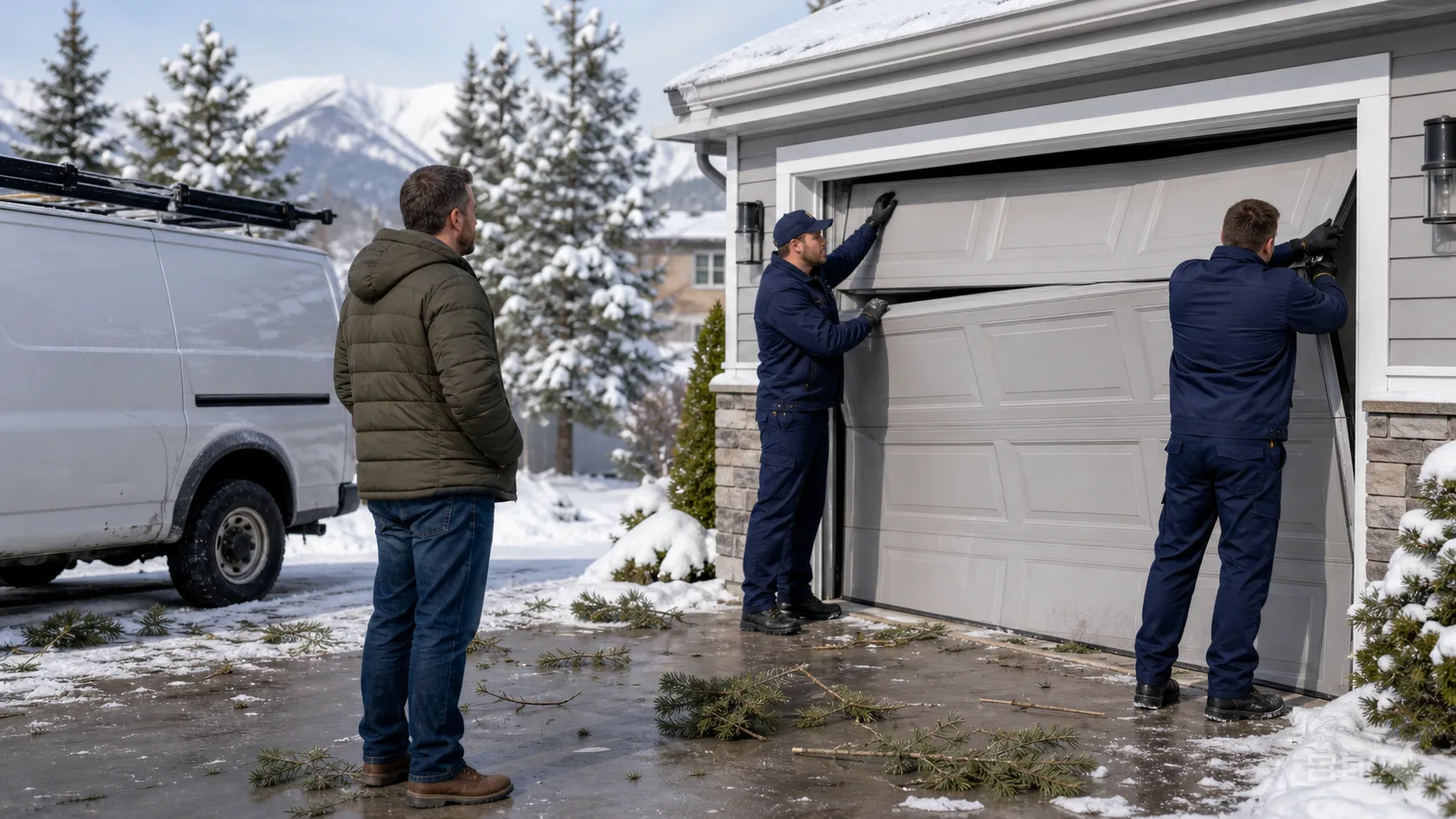
Forcing a Frozen or Stuck Garage Door
On a cold morning, it is tempting to keep pressing the remote until the door finally moves. That habit can be rough on your equipment.
If the door is frozen to the ground or ice is packed in the tracks, repeatedly hitting the opener can:
- Burn out the motor
- Strip internal gears
- Trip safety systems and leave the door half open
Signs the door is frozen instead of mechanically jammed include:
- You hear the opener strain but the door does not budge
- The bottom seal is visibly stuck to ice on the slab
- The door tries to move a little and then stops or reverses
Using brute force on a stuck door is just as risky. Pulling hard on the door, prying the bottom with tools, or bumping it with a vehicle to break it loose often leads to:
- Bent bottom sections
- Twisted tracks
- Damaged hinges and rollers
Bent panels do not seal well, which hurts insulation and wind resistance. That matters in strong Alaska winds and blowing snow.
Simple cold-weather prevention steps help you avoid this:
- Keep the concrete in front of the door clear of ice ridges and packed snow
- Remove slush before it can refreeze at the bottom seal
- Check weather stripping for gaps, cracks, or spots that freeze often
A quick fall inspection by a professional is smart for older doors or heavy insulated models so small issues are handled before freeze-up.
Skipping Professional Help Until It Becomes an Emergency
Many people wait until the door will not move at all before asking for help. That often means being trapped in or out of the garage on a snowy morning or late evening. Repairs in harsh weather are usually more complex, since parts are colder, metal is more brittle, and damage has already spread.
There are also safety and security risks when the door is not working right. Warning signs include:
- The door will not fully close or pops back open
- It reverses randomly for no clear reason
- The opener light blinks but the door behaves differently each time
A door that will not close tight can invite heat loss and make break-ins easier. A door that acts unpredictably is also risky for kids and pets that move under it.
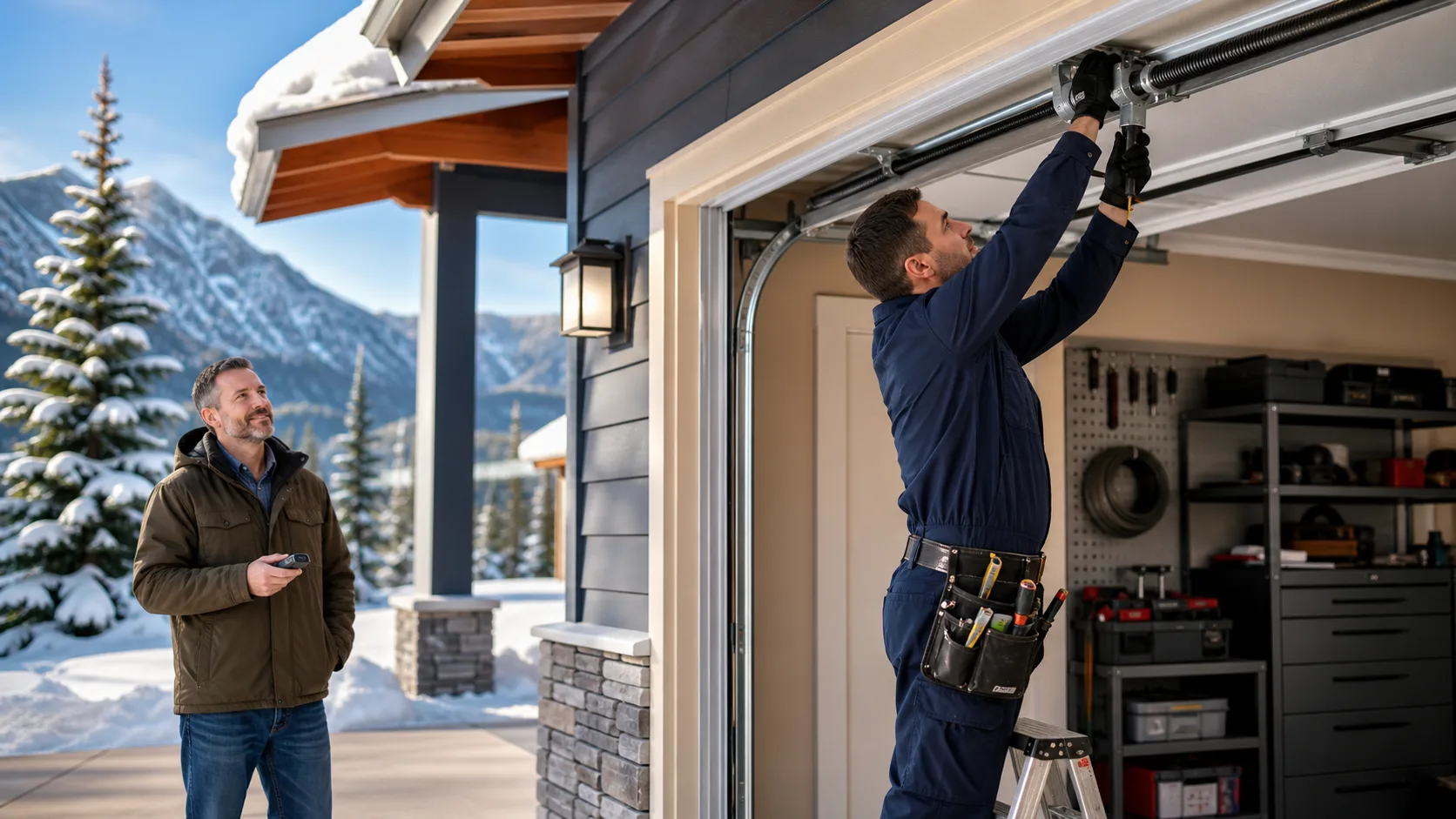
Routine tune-ups from a local, experienced team can prevent many of these problems. A typical pre-winter visit often includes:
- Checking spring tension and door balance
- Tightening hardware and inspecting rollers and hinges
- Lubricating moving parts with cold-friendly products
- Testing safety sensors and opener settings
- Inspecting weather seals and bottom rubber
Small adjustments and early repairs extend the life of the door and opener and help your overhead garage door system stay dependable through Alaska winters.
Restore Your Garage Door’s Safety And Reliability Today
If your door is noisy, off track, or not closing properly, we are ready to help you fix it before it turns into a bigger problem. Schedule professional overhead garage door repair with Elite Doors so your home stays secure and your door operates smoothly again. Reach out to our team with a quick call or message through our contact page, and we will get you on the calendar fast.