Why Reliable Garage Doors Matter in Alaska
A good garage door in Alaska is not just for looks; it is part of how your home works every single day. When you are dealing with long winters, icy driveways, and strong winds, you need a door that opens when you need it to and closes tight when you are done. For many Mat-Su Valley and Anchorage homeowners, the garage is the main way in and out of the house.
A dependable door helps keep your vehicles, tools, and outdoor gear out of the harsh weather. It also helps keep warm air in and cold air out, which matters a lot when temperatures drop. When your garage door works the way it should, daily routines like commuting, hauling groceries, loading up for hunting or fishing, or getting kids to school feel a lot easier.
When you understand common residential garage door service needs in our climate, you are less likely to get stuck with a door that will not open on a dark, freezing morning. You can plan ahead, avoid many emergencies, and keep your home safer. You can also stretch the life of your door and its parts, which saves money and stress over time.
How Alaska’s Climate Impacts Your Garage Door
Alaska’s weather is tough on garage doors. Extreme cold makes metal parts contract and can make them more brittle. Springs, hinges, and rollers all take on more stress when they are working in low temperatures day after day.
Cold temperatures can also affect your opener. Grease can thicken, motors work harder, and plastic parts may crack more easily. When things are already worn, the cold can be the final push that leads to a sudden failure.
Snow, ice, and wind bring their own problems, such as:
- Ice buildup on tracks and around the bottom of the door
- Frozen weather seals sticking to the concrete
- Sensors getting knocked out of line by snow, slush, or shovels
- Wind pushing on the door and straining panels and hardware
Seasonal patterns matter too. In winter, your door often works overtime while dealing with heavy cold, ice, and snow. In spring, thaw cycles bring moisture that can creep into hardware, panels, and weather seals. Summer is usually the best time to plan residential garage door service, since the weather is more cooperative and minor issues are easier to spot and fix before the next freeze.
Residential Garage Door Service Basics
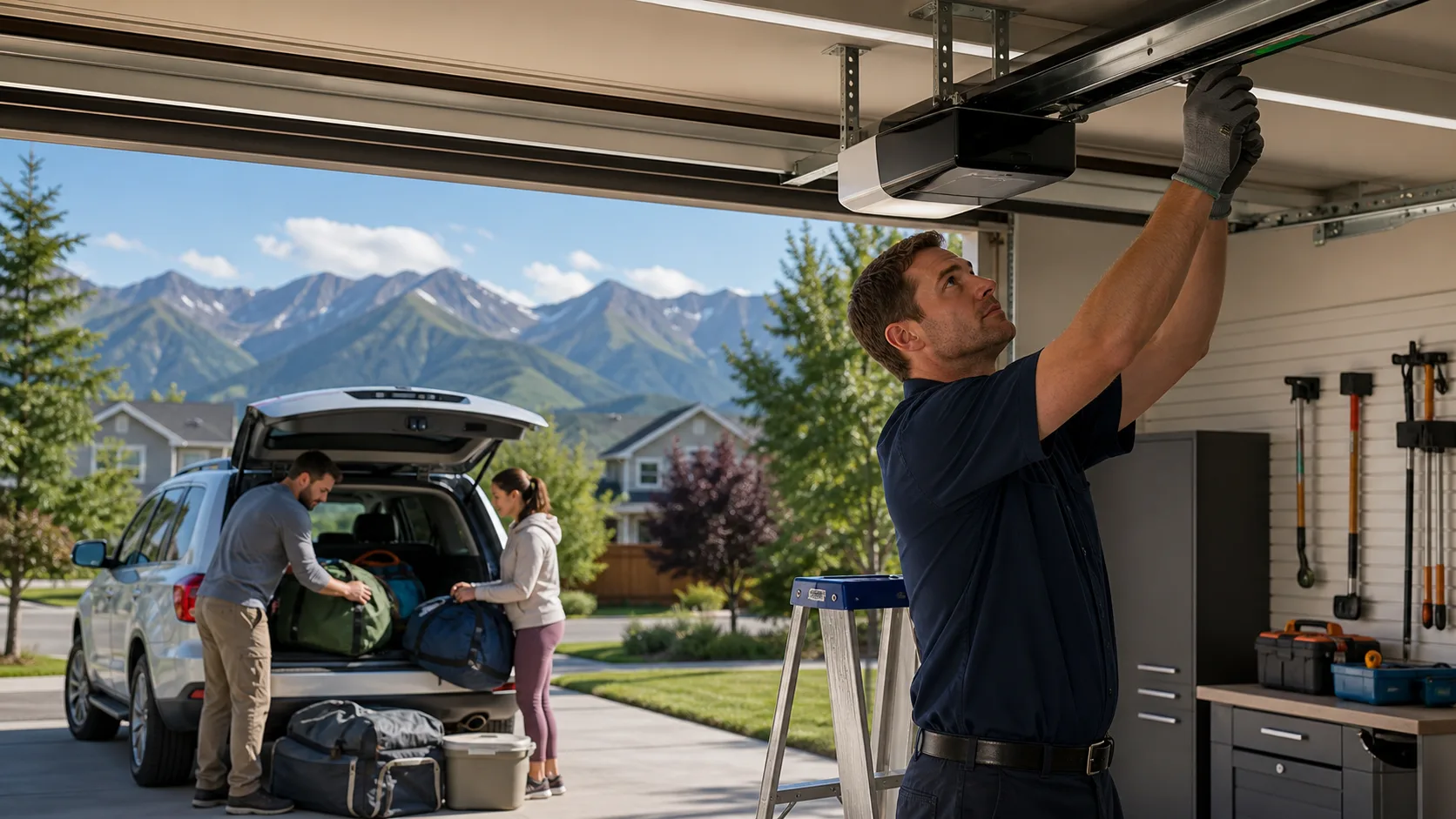
Residential garage door service is more than just fixing something when it breaks. A typical service visit is a full checkup on how your door and opener are working together. The goal is to spot small problems before they turn into big ones.
A standard service often includes:
- Visual inspection of panels, tracks, rollers, hinges, springs, and cables
- Lubrication of moving metal parts where needed
- Balance testing to see if the door is too heavy for the opener
- Tightening of loose hardware and checking the tracks for proper alignment
- Safety tests on the opener, including auto-reverse and photo eye sensors
It helps to know the difference between maintenance, repairs, and replacement. Routine maintenance is like an oil change for your door; it keeps things running well and can prevent sudden breakdowns. Repairs come in when something is worn, bent, broken, or not working right, such as a damaged spring or a bent panel. Full replacement makes sense when the door or opener is old, badly damaged, or no longer safe or reliable in Alaska’s severe conditions.
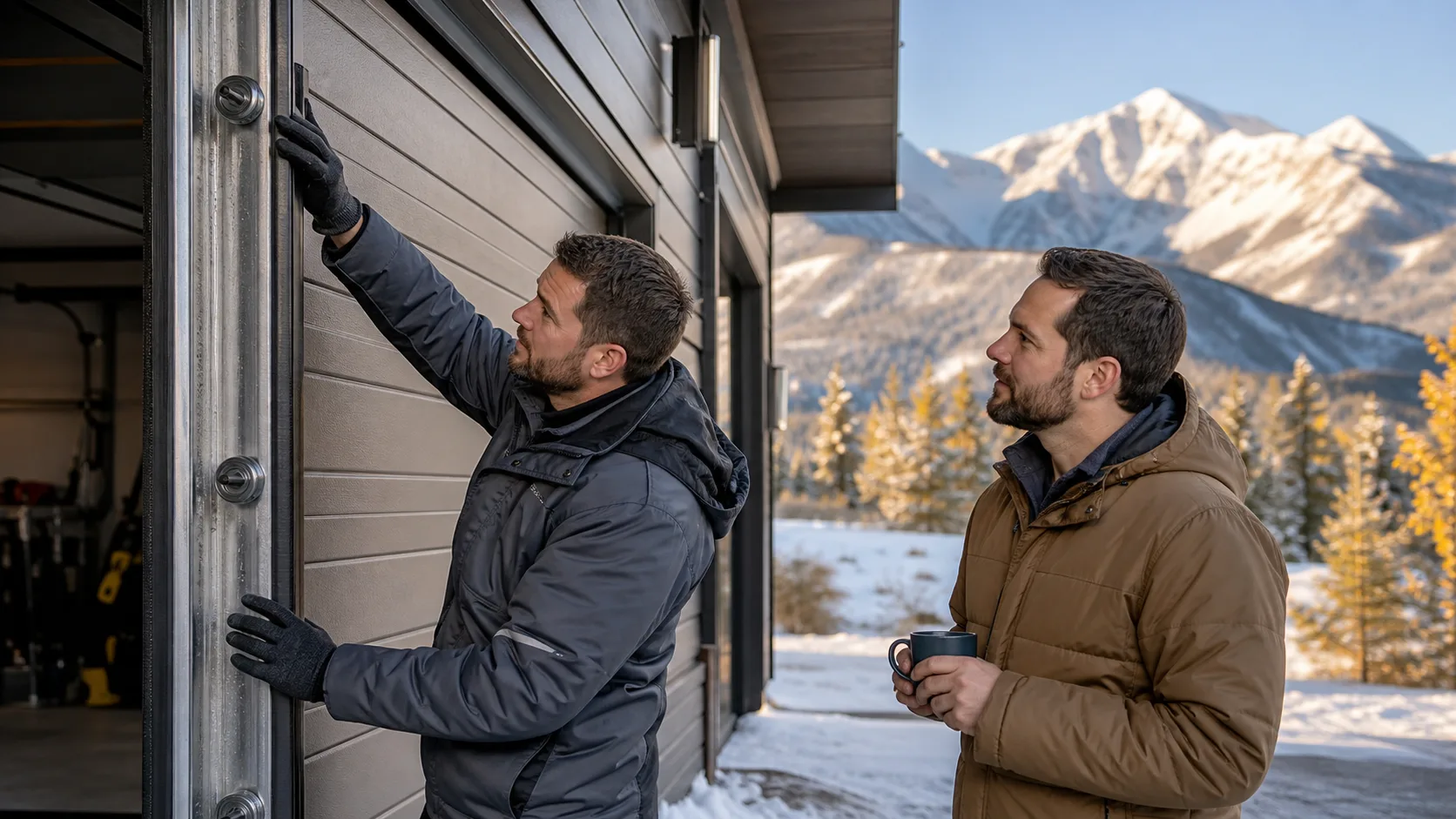
Safety is a big part of residential garage door service. Springs and cables are under high tension and can cause serious injury if handled the wrong way. Homeowners should stay away from adjusting springs, cables, or track alignment on their own. These jobs are best left to trained technicians with the right tools and experience.
Common Garage Door Problems Alaska Homeowners Face
Cold and ice cause many of the garage door problems we see. On very cold days, some doors will not open at all, or they move slowly and make new grinding or squealing sounds. Remotes and keypads can be less reliable if batteries are weak or electronics are stressed by low temperatures. Moisture that freezes at the bottom of the door can make it feel stuck to the ground.
Structural and wear issues are also common, such as:
- Sagging or dented panels from snow loads or accidental bumps
- Frayed or rusted cables that are close to breaking
- Rust on hinges, brackets, and other metal hardware
- Worn or cracked weatherstripping that lets in drafts and snow
Not every problem is an emergency, but some should be handled right away. Urgent issues usually include:
- A door that will not close or stay closed, which affects safety and security
- Broken springs or cables, since the door may be unsafe to move
- Doors that are crooked in the opening or off the track
Slower operation, extra noise, or small gaps around the door are still important, but they may be planned into your next residential garage door service visit. Knowing which problems can wait helps you prioritize and budget without ignoring safety.
Preparing Your Garage Door for Each Season
Getting your garage door ready before the weather turns can make a big difference. Late summer and early fall are smart times to think ahead to the first freeze. A simple seasonal checklist might include:
- Have a professional check springs, rollers, and tracks for wear
- Replace worn weather seals before cold drafts move in
- Confirm that sensors are aligned and clear of debris
- Make sure the opener’s safety features are working well
When breakup season arrives and the snow starts to melt, it helps to look for new rust spots, water damage, and loose hardware. Moisture can work its way into small cracks and weaken parts over time. Many homeowners choose an annual or twice-yearly tune-up that lines up with these tougher seasons.
Between service visits, there are a few light tasks you can handle without getting deep into DIYers’ repairs. You can clear snow and ice away from the door, tracks, and bottom seal. You can check remote and keypad batteries and watch for any loose screws you can see but not adjust more complex parts. Most of all, listen to your door. New grinding, banging, or squealing sounds are signs that it is time to have a professional take a closer look.
Choosing a Local Expert for Long-Term Peace of Mind
Working with a local Alaskan garage door company gives you the benefit of people who live in the same weather you do. A team that works day in and day out in Anchorage and the Mat-Su Valley understands how cold, wind, and ice really affect different types of doors and openers. They are familiar with common housing styles, typical door sizes, and what tends to wear out first in this climate.
When you look for a residential garage door service provider, some helpful things to look for include:
- Licensed and insured technicians
- Clear explanations of what they are checking and why
- Prompt response times, especially in harsh weather
- Quality parts that hold up in cold temperatures
A local company like Elite Doors focuses on installation, replacement, repair, and maintenance for residential garage doors in our area. When you plan preventative service before peak winter conditions set in, you give your door the best chance to stay dependable, safe, and ready for whatever Alaska throws at it. A little attention at the right time can keep your garage door working smoothly and protect your home, your vehicles, and your daily routine all year long.
Get Started With Your Project Today
If your garage door is outdated, noisy, or unreliable, Elite Doors is ready to help you upgrade with trusted residential garage door service. We work with you to find the right door and ensure it is installed safely and correctly the first time. Reach out today and let us know what you need, and we will guide you through your options and next steps. If you are ready to schedule or have questions, simply contact us.