
Stay Ahead of Costly Winter Garage Door Repairs
Overhead garage doors handle a lot of work in any climate, but Alaska winters add a whole extra layer of stress. Extreme cold, blowing snow, road salt, ice buildup, and strong winds all put pressure on panels, tracks, springs, and openers. When temperatures drop, materials contract, metal gets more brittle, and small issues that were easy to ignore in warmer weather can quickly turn into real problems.
Ignoring minor winter damage can create safety hazards for your family, your employees, or your customers. A door that suddenly will not open can leave vehicles stuck outside in subzero temperatures. A broken spring or a door that jumps off the track can lead to emergency repair costs and serious inconvenience. That is why building a simple winter inspection routine into your overhead garage door maintenance is so valuable for homes and businesses across the Matanuska-Susitna Valley and surrounding communities.
In this article, we will walk through the visual signs, sounds, and performance changes that tell you your overhead door needs attention. We will also share when it is fine to keep an eye on a problem and when it is better to have a professional look things over before they turn into an emergency.
Visual Red Flags on Your Overhead Door Panels
One of the easiest ways to spot winter damage is to stand outside and take a slow look at your garage door panels. Winter often means snow blowers, shovels, and plows, and all of those can leave dents or dings in metal doors. On wood or composite doors, you might notice cracks, chips, or areas where moisture has penetrated and started to swell the material.
You will also want to look for rust spots and peeling paint. Road salt and moisture can eat away at finishes and protective coatings. Rust along the bottom sections or around hardware can spread if it is not addressed. On insulated doors, damaged skins or rusted-through areas do more than look bad; they can reduce insulation and allow cold air to pour into your garage.
Winter’s freeze-thaw cycles can cause panels to warp or bow slightly. Stand back and look at the door from the side. Do any panels look like they are sagging or twisted? Misaligned or sagging panels can signal underlying structural or track problems that become more noticeable when the metal contracts in low temperatures. The door might look crooked in the opening, or light might show through in places that used to be tight.
Some panel damage is mostly cosmetic, like a small dent that does not affect how the door moves or seals. But it is time to talk with a professional if you see:
- Cracks that go all the way through a panel
- Gaps between sections that did not exist before
- Areas where insulation is exposed
- Panel damage that affects how securely the door closes
These issues can affect energy efficiency, weather sealing, and security, and they tend to get worse as winter goes on.
Track, Roller, and Hardware Issues Winter Makes Worse
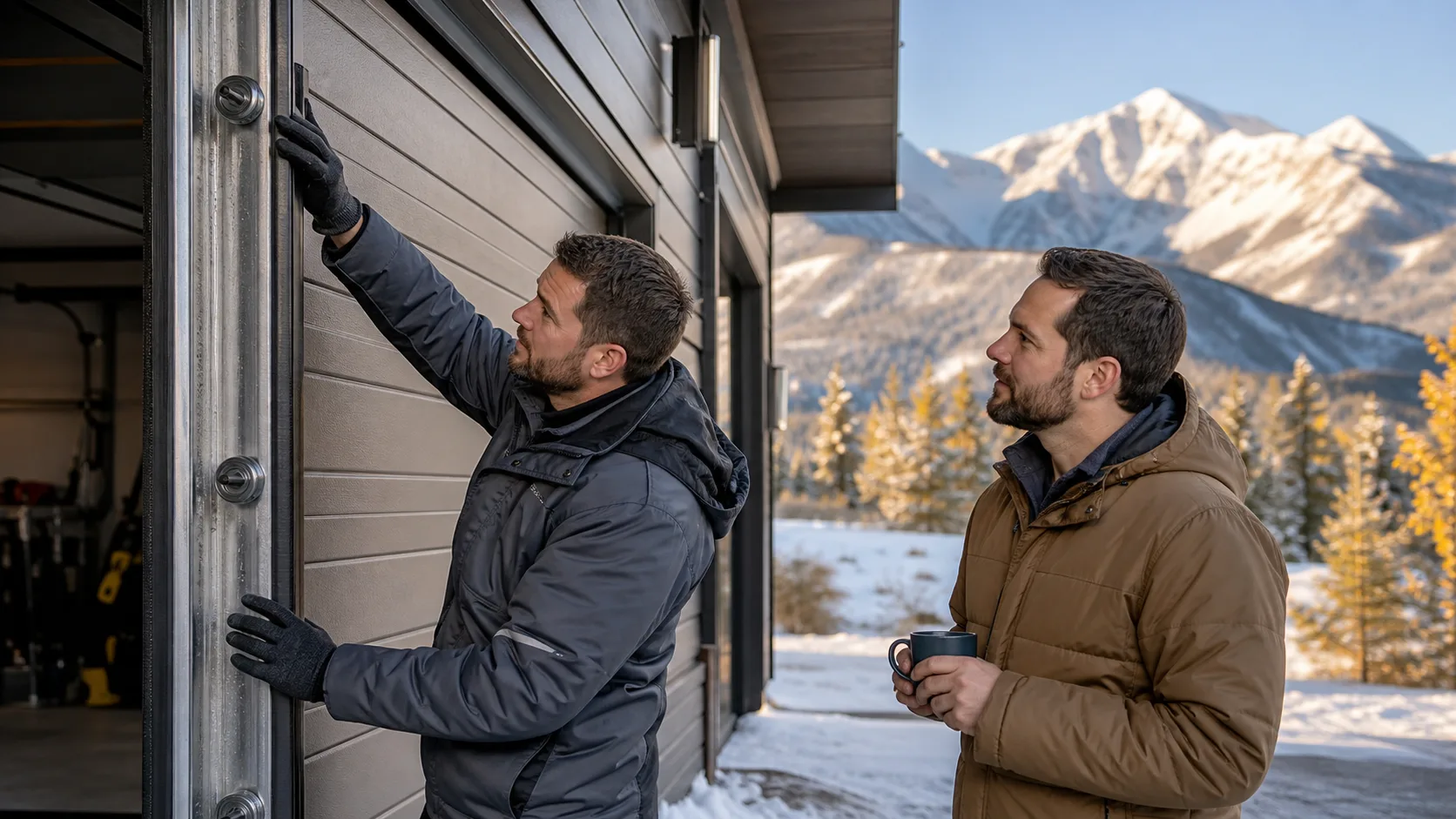
Once you have checked the panels, take a closer look at the tracks and hardware. Snow, ice, gravel, and road sand often end up in the tracks where the rollers ride. When this material packs in and hardens, you might hear grinding or scraping when the door moves. In more serious cases, a roller can climb out of the debris and slip off the track.
Pay attention to signs from your rollers and hinges. Warning signs often include:
- Wobbling or shaking as the door moves
- Squealing or screeching noises
- Visible rust on stems, hinges, and brackets
- Flat spots on rollers that create a bumping feeling
Cold temperatures thicken old lubricants and make dry metal-on-metal contact much harsher. If your door is noisy in winter, that is usually the system telling you it needs cleaning and lubrication as part of regular overhead garage door maintenance.
A simple visual check can help:
- Look along the tracks for packed snow, ice, or grit.
- Make sure the tracks are not bent or pulled away from the wall.
- Check that all roller brackets are tight and not cracked.
If you notice a track that is clearly bent, a roller that has come out of the track, or hardware that looks like it is about to fail, it is safer to stop using the door until it has been checked. Trying to force a door through winter resistance can twist tracks and stress the opener.
Weather Seals, Springs, and Cables Under Cold Stress
Weather seals are your first defense against winter air. Take a look at the bottom seal that touches the concrete and the side and top weatherstripping. Signs of trouble include:
- Gaps where you can see daylight
- Hardened or brittle rubber or vinyl
- Cracks, tears, or sections missing entirely
- Drafts or snow blowing under or around the door
Worn seals let cold air, moisture, and pests into your garage, and they also make your heating system work harder. Replacing damaged weatherstripping is a smart part of winter maintenance and can noticeably improve comfort.
Springs and cables are under heavy tension all year, and winter stress can expose weaknesses. Be alert for:
- The door opening unevenly or looking crooked
- The door slamming shut instead of closing smoothly
- Visible frayed or loose cables
- A door that suddenly feels extremely heavy to lift manually
These are all signs that springs or cables may be failing. Because springs and cables store a large amount of energy, they are dangerous for untrained people to adjust or replace. This is especially true in freezing conditions, when metal is less forgiving. These components should always be inspected and repaired by a trained technician, not as a DIY project.
Listening for Trouble in Your Garage Door Opener
Winter is also a good time to listen closely to your garage door opener. Unusual sounds often show up first on the coldest mornings. You might hear grinding, straining, or a loud humming while the door barely moves. Sometimes the opener grows noticeably louder than it was in warmer weather.
Watch how the opener performs:
- Does the door open more slowly than usual?
- Does it hesitate or stop mid-travel?
- Does it reverse for no obvious reason?
- Does it struggle more after the temperature drops?
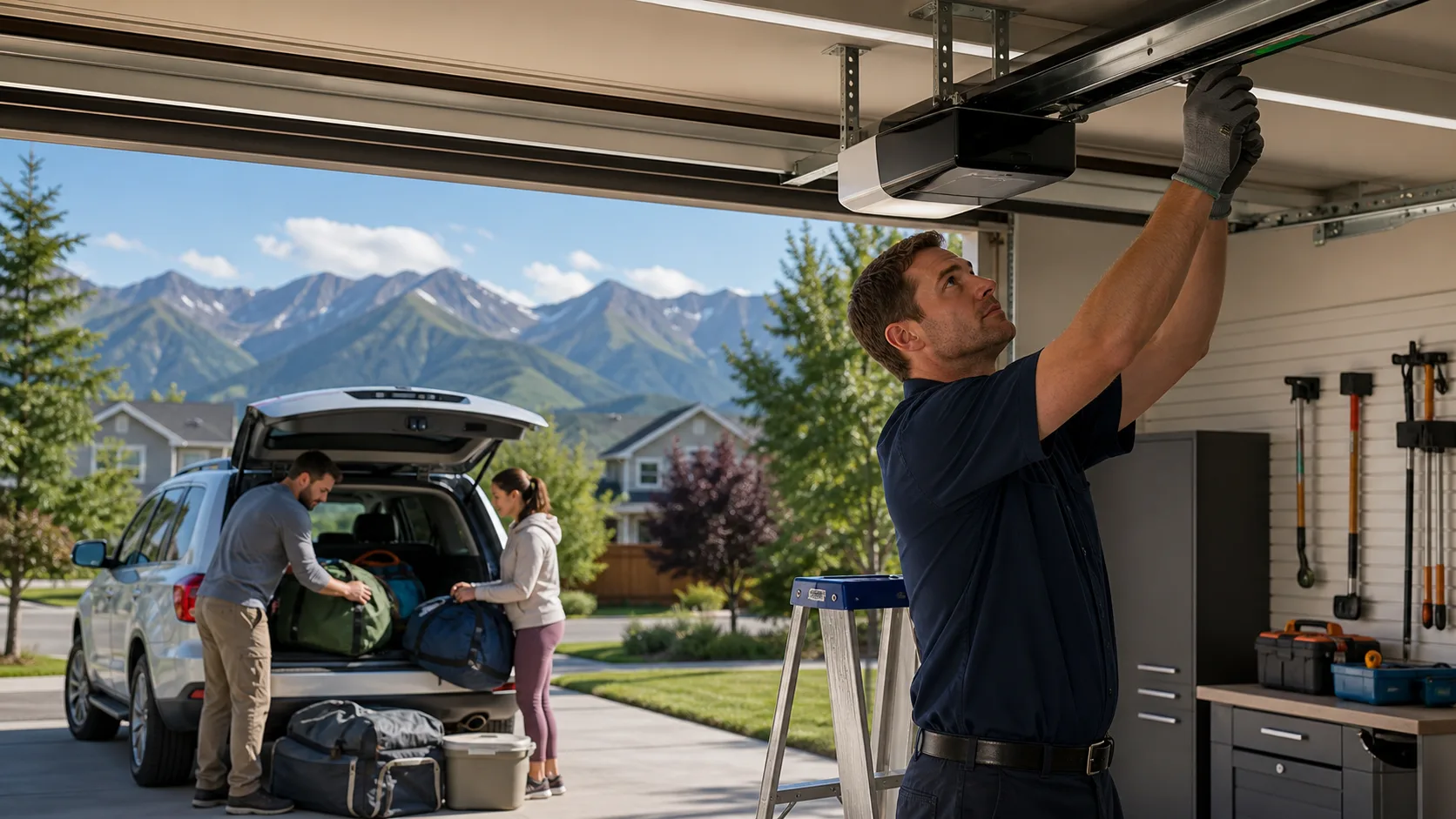
These signs can be related to stiff door hardware, failing opener parts, or safety sensor problems. As part of an overhead garage door maintenance routine, it helps to check that the safety sensors are aligned and clean, the opener’s force settings are not turned up too high just to muscle through resistance, and the drive chain, belt, or screw is in good condition.
If the opener motor keeps running but the door does not move, or if the opener frequently stops and reverses, avoid repeatedly hitting the button. That can cause extra wear or damage. Instead, the entire system, door and opener together, should be evaluated to see where the real resistance is coming from.
When to Call for a Winter Safety Check
Not every small noise or scuff means trouble, but certain signs of winter damage should be treated as a reason to pause and get a professional inspection rather than trying to fix things yourself. These include:
- Broken or stretched springs
- Bent or twisted tracks
- Severe panel damage affecting how the door moves or seals
- Repeated opener failures such as constant reversing or stopping
- Cables that are frayed, off the drum, or visibly damaged
A seasonal safety check and overhead garage door maintenance visit can catch these problems early. That helps prevent emergency breakdowns, protects vehicles and stored items from the cold, and can improve the energy efficiency of your home or business. For property owners in the Matanuska-Susitna Valley and nearby Alaska communities, staying ahead of winter wear on your overhead door system is one of the simplest ways to keep daily life moving smoothly when the weather is at its toughest.
Protect Your Home With Reliable Garage Door Care
If your garage door is noisy, slow, or not sealing properly, now is the right time to schedule professional overhead garage door maintenance. At Elite Doors, we inspect, tune, and repair your system so it operates safely and smoothly in every season. Reach out today and let us handle the details while you enjoy a quieter, more dependable garage door. If you are ready to book service or have questions, simply contact us.