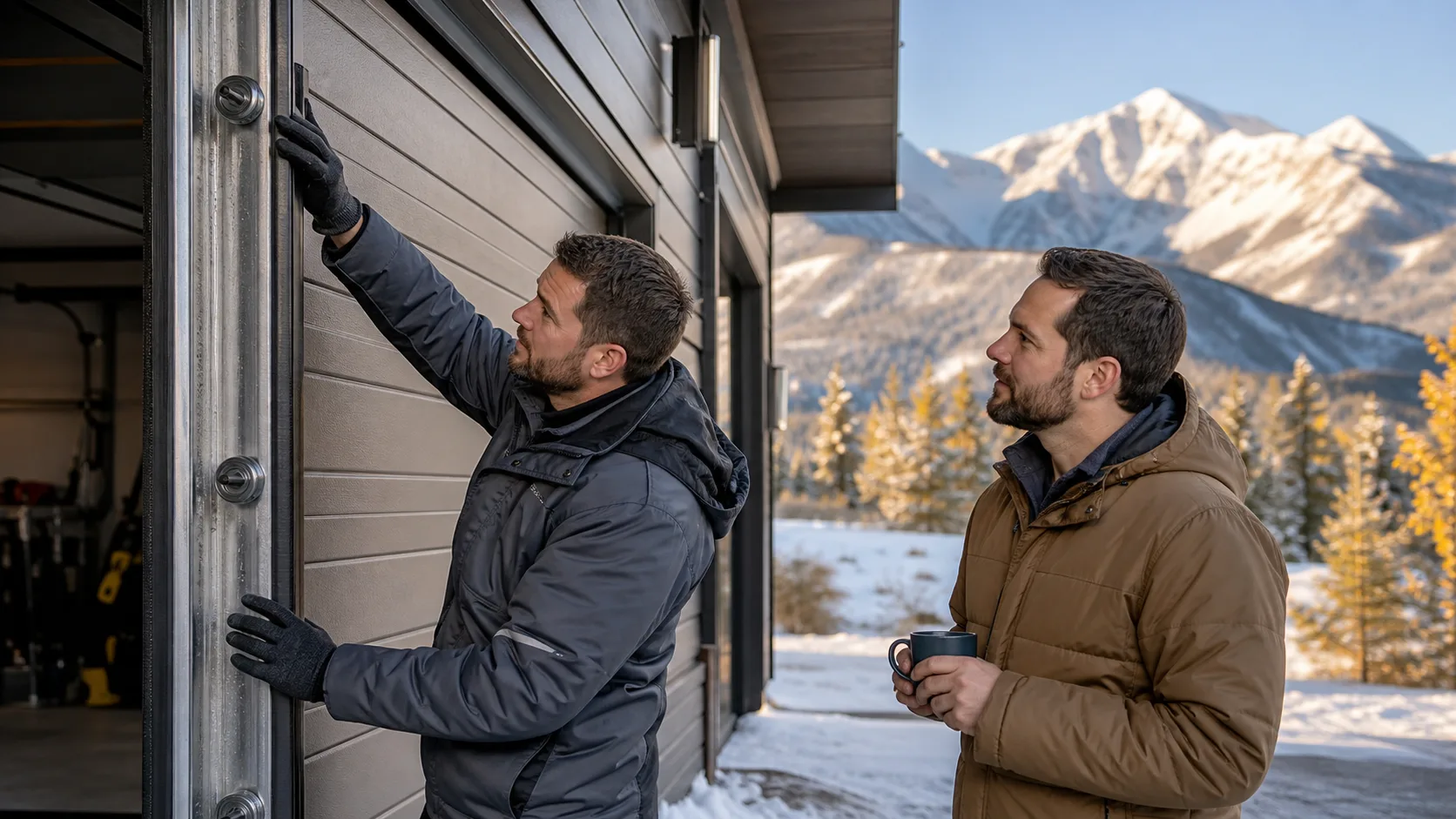

Frozen garage door tracks are a common winter problem in Anchorage, Wasilla, and Palmer. Ice buildup in the track can stop the door, trigger reversing, or strain the opener. Below are the most common causes, warning signs, and safe next steps.
Frozen tracks might seem like a minor hassle at first, but they can quickly lead to bigger problems if ignored. That’s why garage door maintenance and repair is something we always take seriously as the cold season gets underway. A little bit of care and awareness now can keep your garage door working smoothly through the toughest months of the year. Freezing temperatures can come on suddenly and last for days or weeks. Also, the effects on your home’s exterior, including your garage, are often unpredictable.
Why Garage Door Tracks Freeze in Alaska
If you live in an area like Anchorage or Wasilla, frozen garage tracks are something you’ve probably seen before. Once the snow starts falling and the freeze sets in, the conditions are just right for tracks to ice up. Sometimes, even a little snow brought in by car tires is enough to set things in motion. This can cause ice to build up along your garage door track.
- Snow and slush from tires and boots collect at the garage entry. As they melt inside the track, that moisture can refreeze overnight, creating a stubborn block by morning.
- Water from thawed snow seeps into cracks and corners. When temperatures drop again, ice forms inside the track, leaving very little space for the rollers.
- Cold weather makes metal contract, which tightens the space between rollers and the track. That leaves very little room for movement.
We see these patterns every December, especially after a day of snowfall followed by a deep freeze. One day you’re coming and going like normal, and the next, your door won’t budge. Even small drips or thin layers of ice can slow down the rollers or force the track out of shape, especially when temperatures bounce above and below freezing over a short time.
How Frozen Tracks Affect Your Garage Door
The longer frozen tracks stick around, the worse things can get for your garage door. It’s not just a matter of getting stuck. When tracks ice over, the entire system has to work harder. That creates stress on other parts of the door. In the colder months, everything moves a bit more stiffly. Plus, icy buildup can make smooth motion impossible.
- Your door might hesitate, stop suddenly, or reverse before closing, especially if the sensors pick up resistance.
- Rollers that try to move through ice are more likely to slip off, jam, or wear out too soon, which can mean repairs are needed faster than usual.
- If you try to force the door open or closed, it can put too much pressure on the motor, the cables, or the spring system, leading to mechanical breakdowns.
All of this can lead to broken parts or uneven movement. On colder days, those extra seconds waiting for the door or hearing strange grinding sounds can be a sign that things are on the verge of bigger trouble. Even if the door seems to open and close eventually, the hidden stress can wear out parts in ways you might not notice right away. Sometimes, the only sign is a new noise or a slight delay when you expect a smooth glide up or down.
Warning Signs Your Tracks Might Be Iced Over
Frozen tracks don’t always look obvious at first. But your door will usually give you hints when something’s not right. If you can catch the signals early, you’ll have more time to act before ice damage spreads. Knowing the warning signs makes it easier to stay ahead of bigger repairs. Winter can create so many problems at once. Just noticing small changes often makes a huge difference.
- The door feels slower than usual or seems to skip during movement, which can be the first clue.
- You start hearing loud scraping or popping sounds when the door opens or closes, often even before you see any ice.
- Ice is visible near the track base, or you notice the door isn’t fully aligned. Sometimes, the ice forms inside the track where it’s harder to spot right away, so staying alert to new noises or changes in door motion pays off.
If it’s freezing outside and your garage door is acting differently, it’s smart to check for any signs of frozen build-up along the tracks. Even a thin layer of ice can block the rollers and throw off the entire system. Not only does this slow things down, it increases the chance of bending or breaking something if the door continues to operate against an icy blockage. On some days, things might feel normal at first. Then, everything may suddenly grind to a stop as a small patch of ice grows into a bigger problem.
Why Professional Help Beats a Quick Fix
It might be tempting to chip away at the ice or try to force the door open when it’s stuck. But that kind of quick fix can do more harm than good. These doors are heavy, and the parts are carefully balanced, especially in tough winter conditions. Without the right tools or a careful hand, simple fixes can turn into serious damage.
- Banging on frozen metal can bend or crack tracks, making things worse, and might create sharp edges or further misalignment.
- Forcing the door to move can snap a cable or damage the opener, leaving your door stuck open or closed when you need it most.
- A professional can check for hidden issues like track warping or worn rollers caused by the cold, and spot trouble before you end up with a door that won’t move at all.
Winter problems tend to build up faster, so small fixes are best handled by someone who can spot the deeper cause. Regular garage door maintenance and repair can save a lot of time later on. This is especially true once the deep freeze settles in and outdoor repairs become harder. Having experts look at your door can reveal small problems before they turn into big repairs. This is especially important in the middle of a long Alaskan winter. Professionals also have the training, equipment, and experience to get things moving again safely, no risky prying, banging, or freezing your fingers in the process.
Elite Doors provides seasonal garage door maintenance and repair for homeowners and businesses around Anchorage, Wasilla, and Palmer, with a focus on weather-resistant repairs and well-timed service. When the cold sets in, being proactive with your garage door means you’re less likely to end up trapped inside. That way, you avoid waiting for help during a storm.
Winter Wins When You Stay Ahead
We’ve seen how frozen tracks can turn a normal day into a frustrating one, especially when you’re trying to leave on a cold, dark morning. The ice might slow you down, but the bigger trouble comes when frozen parts are forced and eventually break. It’s always easier to handle small annoyances before they grow. When you’re aware of the warning signs and know what to look for, you’re already staying one step ahead of winter’s worst surprises.
Staying alert to early signs like jerky movement or icy build-up can make a big difference. When we stay ahead with a little routine care or a quick check, it helps avoid those stressful moments in the cold. Winter in Alaska isn’t easy, but keeping your garage door moving doesn’t have to be hard. Small steps now can keep things running all season long. Prevention makes winter life smoother. A little attention up front can save hours or days of waiting for repairs when it’s freezing outside.
Prevent Stalls and Breakdowns All Winter
Winter can be tough on garage doors, but staying ahead with regular care helps prevent issues like frozen tracks. When your door shows early signs of wear or starts acting up, our team is ready to step in before minor problems turn into bigger concerns. We handle everything from seasonal checks to full-service garage door tune up in Anchorage so your door keeps working smoothly when you need it most. Elite Doors understands Alaska’s winter demands and prepares your garage for whatever the season brings. Give us a call to keep your garage door reliable all winter long.